
She Couldn’t Say No, but She Binged While Everyone Slept
*Sarah was a self-proclaimed pushover. She came to me a few years ago to deal with a pretty intense binge and restrict cycle. She would eat “properly” and “healthily” in front of people, showing them how “good” she was. But late at night when her roommates were sleeping, she’d Door Dash upwards of $300 to her apartment and eat it in her bed while doomscrolling. She’d then bring the empties downstairs to the city garbage receptacles at the end of her block. Even if it was three am, even if it was pouring rain. She protected her secret like a priceless gem.

She would eat “properly” and “healthily” in front of people, showing them how “good” she was. But late at night when her roommates were sleeping, she’d Door Dash upwards of $300 to her apartment and eat it in her bed while doomscrolling. She’d then bring the empties downstairs to the city garbage receptacles at the end of her block. Even if it was three am, even if it was pouring rain. She protected her secret like a priceless gem. Night Eating was the only time she felt like she could relax.
Top Secret Middle of the NIght Binges Happened All the Time
When I first began working with her, she told me that she didn’t really have needs, that she never got angry and that she was a “go with the flow” type of person. During our sessions, she waited politely for me to ask questions and she always responded with “the right” answers.
But as we continued to work together, the parts of her that were not content, that wanted more, began to peek through.
She Tried to Be Perfect
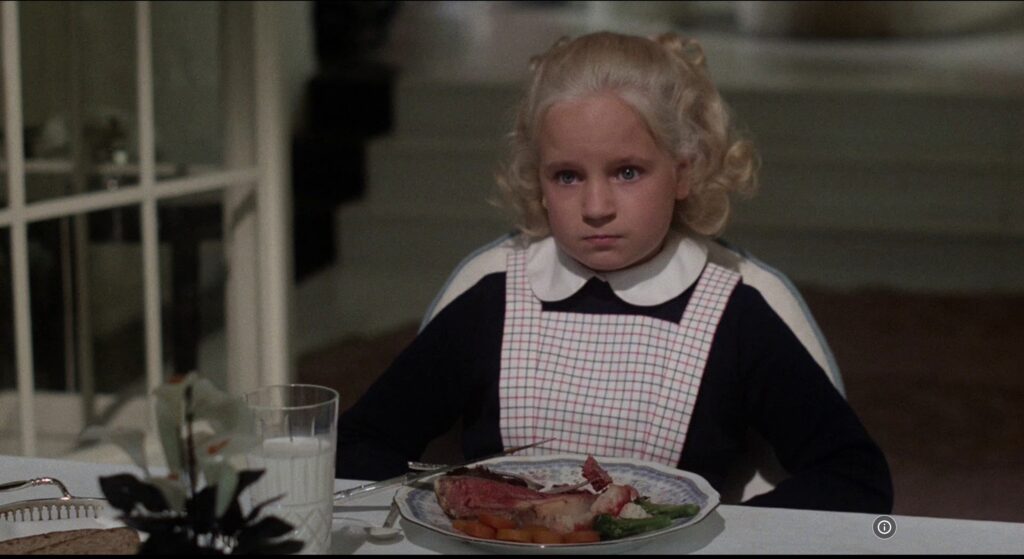
Sarah grew up in a family where the women were pretty, thin and polite and the children were taught which fork to use for salad before they could talk. They didn’t run around with dirty fingers and toes and knots in their hair- tracking dirt all over, they were perfect little puffs of cotton, willowy, wispy and quiet. At least they were supposed to be. Children were meant to be taught to have perfect table manners and having feelings or objections were seen as tantrums or dramatic. If her parents saw other children who were unable to sit still, who played, who screamed when they were mad or tired, those children and their unfit parents were fodder for discussion about poor parenting and bratty children.
The Judgment Mirror: Why Other People’s Boundaries Feel Offensive
One weekend, Sarah’s brother and his family came to visit their parents. Sarah explained to me that it was a stressful weekend – that her niece and nephew were spoiled and that her sister-in-law was a bad parent.
“What do you mean by ‘bad parent?’” I asked.
“They can’t sit still, while they’re eating and they won’t eat what’s on their plate, they just keep walking away from the dining room table while we are still eating. My mom tried to give them her phone so they’d sit still but my sister-in-law wouldn’t even let them have any screentime- just this once so that we could have a peaceful meal… It felt so rude!”
“Were you out at a restaurant? Were they bothering other people? Were they a danger to themselves or others?
“No,” she told me, “They were at my parents’ house,”
“I’m having trouble understanding what the problem is, can you explain it to me?” I asked her.
“Well, when I was growing up, there is no way I would ever have acted like that. If I did, you have no idea how much trouble I’d get into. My mother does not stand for disrespectful children.”
“Oh,” I said, “I see – so what was it like for you when you were disciplined for acting like a… um, a normal child who didn’t want to sit quietly and stay at the table for the whole meal?”
And that’s when she broke down. “I mean… it was terrible. They never let me be me, I got in trouble for doing the wrong thing all the time. I never knew what I was going to get in trouble for next.”
Sarah grew to believe that if she had her own preferences, her own desires, that she was “bad.” But she wanted to be “good.”
This is of course, not unusual. Many children are taught to have exquisite table manners and to eat what is put in front of them lest they face the wrath of an angry parent or teacher. But what does it do to their psyche?
In the case of Sarah, she was afraid to speak up for what she wanted. As she got older, she completely lost the understanding of what she wanted. She instead cultivated a “go with the flow” personality where she never had any opinions about what she ate, what movie she and her friends should watch, and any set of circumstances where her choices were unlimited. She would say, “I’m easy, I’m up for anything,” and she never said “no.” Drive her ex-boyfriend to the airport at midnight to see his new girlfriend? Sure! Dog-sit her sister’s friend’s incontinent dog while she’s in Europe for the summer? Why not! Ask Sarah, she’s so easygoing!
Being a pushover was exhausting.
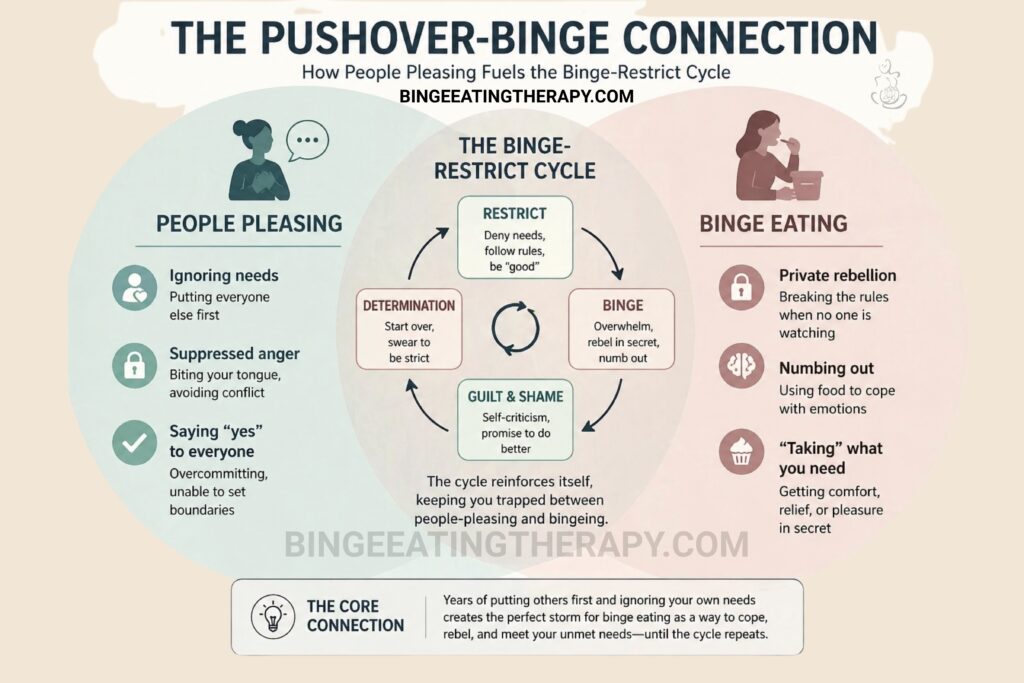
Trading Performance and Perfection for the Sake of Your Sanity
As Sarah and I continued to work together, we began to wonder together about what she really liked, what she was actually capable of, and what would happen if she said no.
It was scary at first, and in all honesty, her worst fear did happen. Some people became incredibly angry at her and dropped her as a friend. But she wasn’t as upset as she thought she’d be. In fact, she was relieved. She began to spend more time with the people who didn’t take advantage of her generous nature, and if she said “no” to a request, they didn’t get angry at her, they accepted it.
And as Sarah learned to address her needs and desires, and began to eat what she actually wanted, she found that her binge eating behavior decreased and she felt more comfortable not just around food and in her body, but in the world.
*Not her real name